Aluminium Glass Design shares practical, budget-wise guides for aluminium and glass work in Indian homes: sliding and casement windows, doors, partitions, shower glass and mirrors. Learn how to check quality, fix common problems safely, choose the right profiles and glass, and know what to ask your fabricator before you pay.
Aluminium Glass Design
A calmer room starts with a plan, not a renovation.
Explore a digital guide for making thoughtful changes to a rental bedroom. Check the book's details on the store before buying.
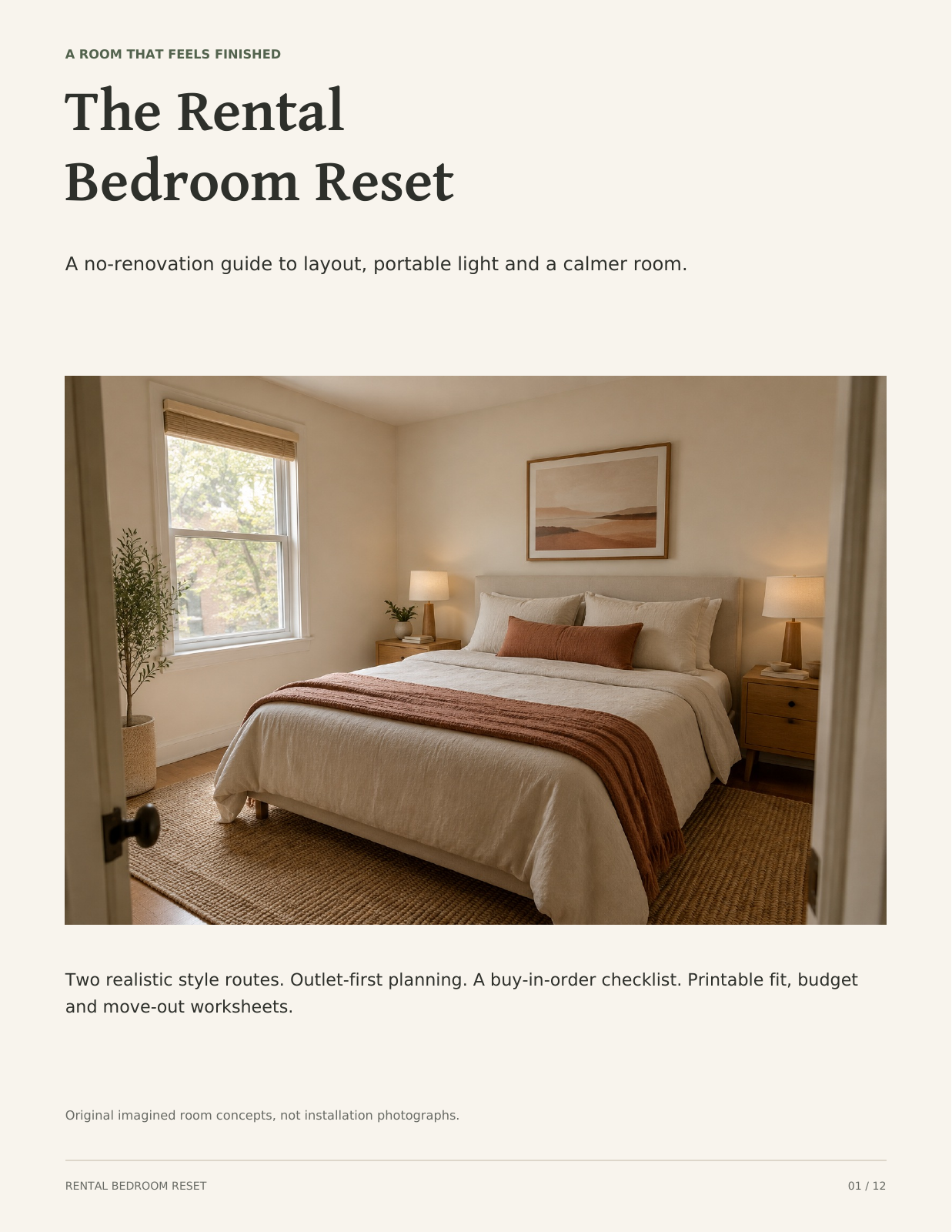
Plan your room with two illustrated style routes, layout checks, portable-lighting planning and an optional reading corner. Includes room-audit, shopping-budget, light-map and move-out worksheets.
This is a digital PDF. No physical book, furniture or lighting is included. It is a room-planning and styling aid, not architectural, electrical or lease-compliance advice. Check your lease, room dimensions and product instructions before making changes. Payment and file delivery are handled by the linked store. Check its current price and terms before checkout.
Seller disclosure: these are Aditya Mishra's products. Buying through the links supports this site's owner.
Black spots creeping in from the edges of a bathroom mirror look like dirt at first. They are not. The dark patches are the mirror's reflective backing breaking down, and once it starts, no cleaning product will bring the silver back. What you can do is understand why it started and stop it from spreading fast. What the black edge actually is A mirror is glass with a thin layer of silver on the back, protected by paint. Where moisture, cleaning chemicals, or salty air reach that backing, the silver oxidises and turns black. Because the backing is behind the glass, the damage shows through as dark spots or a dark border you cannot wipe away from the front. People call it desilvering or mirror rot. Why bathrooms speed it up Three things attack the backing. Steam and condensation keep the mirror damp for hours, and water wicks into the edges where the backing is most exposed. Ammonia-based glass cleaners, sprayed directly on the mirror, run down and pool at the bottom edge, eatin...
Get link
Facebook
X
Pinterest
Email
Other Apps
Small rental bedroom storage: test the walking route before adding a shelf
Get link
Facebook
X
Pinterest
Email
Other Apps
-
Aditya's source guide. Cover imagery is illustrative, not evidence of results.
When a bedroom feels crowded, another storage unit can make the problem worse. It may hold the clutter but take away the place you need to walk, open a drawer or get into bed. Before adding a shelf, test the space it will use.
You do not need a makeover budget for this first step. You need real measurements, a rough sketch and one clear problem to solve.
Start with the problem, not the furniture
Choose one sentence: "I cannot open this drawer comfortably," "My bedside surface is crowded," or "I have no place for the items I use daily." These are different problems. A larger cupboard is not automatically the answer to any of them.
Keep the bed, dresser and storage pieces that still work. Move only safe, manageable items; get help with heavy furniture. Check the manufacturer's assembly and anchoring requirements before moving or adding a tall unit.
A simple before-buying map
FIXED PART
SPACE TO KEEP
Door and window
Their opening movement and access
Dresser
Drawer travel plus room to stand
Bed
Your actual route in and out
Outlet, heater or vent
Safe access and required clearance
Original room-audit visual. This is not a scaled plan or a building-code clearance chart.
1. Measure the whole object
For a bed, measure the frame, not just the mattress. For a dresser, measure the body and the space its open drawers occupy. For a proposed shelf, check its stated width, depth and height, then read how it must be secured.
Use one unit throughout your sketch. A quick drawing with consistent measurements is more useful than a polished drawing with guessed furniture sizes.
2. Mark the candidate footprint
Use loose paper markers to outline the new item's footprint. If you choose painter tape, first confirm it is suitable for your floor finish. Do not assume an adhesive is deposit-safe.
Walk your usual route. Open the door and dresser drawers. Try the route while carrying the things you normally carry, without stepping over the markers. If the position feels cramped, try a narrower option or skip the item.
3. Keep the change reversible
This exercise favors movable pieces, but "movable" does not mean a tall shelf is safe without anchoring. Follow the product's instructions. If required fixings conflict with your lease, ask the landlord before buying rather than leaving the unit unsecured.
Keep windows, heat sources and electrical access in the plan. A storage solution is not useful if it blocks another part of daily life.
Written by Aditya, using his original Rental Bedroom Reset material. This is room-planning education, not architectural, structural or lease advice. There is no universal fit or deposit-safe promise.
Ordinary dust and fingerprints do not call for a scraper. Start with a clean, grit-free cloth and the care instructions for your glass and frame. A stronger chemical is not automatically a better fix. Quick Answer Rinse loose grit away, wash with a mild manufacturer-approved cleaner, rinse thoroughly and dry with a clean cloth or rubber squeegee. Test a small area first. Coated or specialty glass may need different care. First, Identify The Surface Plain glass, coated glass, etched glass and acrylic are not interchangeable. If you do not know what the panel is, check the supplier's paperwork before experimenting. Follow the frame maker's rules too, particularly around finishes and seals. The Five-Step Routine 1. Check and test. Read the glass and frame instructions. Try the permitted cleaner on a small, inconspicuous area before doing the whole panel. 2. Remove grit gently. Rinse with clean water. Do not rub dry dirt across glass. Protect flooring and nearby electrical fittings...
Quick answer: A glass-front cabinet works best when you choose what should remain visible before you buy it. Make a small display zone and keep everyday clutter elsewhere. Then check the exact cabinet's anchoring instructions, shelf limits and door clearance. A pretty photograph cannot answer those safety questions. Start with the storage problem, not the trend Apartment Therapy's discussion of kitchen trends for 2026 raises a useful concern: glass-front storage can look cluttered when ordinary daily items are always visible. That is one designer's view, not a rule that glass cabinets are wrong. A better question is whether you want a display or a place to hide things. Put the items you would display together on an existing shelf. Remove duplicates, packaging and things you use too often to keep arranged. If the group still feels crowded, a larger glass cabinet may simply show more clutter. Closed storage may suit the job better. Plan two kinds of storage A visible zone c...
Quick answer: If cooking leaves your kitchen windows wet, check how moisture leaves the room before replacing the glass. A cooker hood, a window and built-in vents do different jobs. Start with the equipment you have and ask a professional before altering ducts, wiring or gas-appliance ventilation. In this guide: The problem · Window vs extractor · First checks · Layout planning · Get help What is the problem, and why does it happen? Cooking releases water vapour, odours and particles. Moist air meeting colder glass can form droplets. A room that looks clean can still have an air-quality problem: some pollutants cannot be seen or smelled. Condensation alone does not identify the cause or prove that the aluminium frame or glass has failed. A window and a cooker hood are not interchangeable A window allows natural airflow, but how much air moves depends on conditions and the layout. An extractor positioned above the cooking area is intended to capture cooking by-products near...


Comments
Post a Comment