Quick answer: If a small living room feels cramped, test the coffee table's footprint and the route around it before replacing the sofa. A table can be useful and still be too large for the way you move through the room.
Start with the movement that fails
Can you walk from the door to your seat without turning sideways? Can someone stand up while another person passes? Can you reach a drink without balancing it on a crowded edge? Pick the problem you actually notice, rather than copying a photograph.
Current small-living-room coverage puts attention on furniture that earns its space, including tables with storage and movable pieces. Those are useful ideas, not proof that every trunk, ottoman or round table fits every home.
Try a no-buy footprint test
Record the route. Sketch doors, seats, fixed furniture and the path you use most. Include doors and drawers when open.
Move loose clutter first. Relocate objects that do not need to live here. Do not move a heavy table alone.
Compare the footprint. Mark a proposed smaller shape on paper or use a flat sheet as a temporary outline. Avoid tape that could damage flooring and do not leave raised edges as trip hazards.
Test ordinary tasks. Sit, stand, carry an empty tray and open nearby storage. Remove the temporary outline after the test.
Write down the trade-off. A smaller table may improve movement but hold less. Decide what must stay within reach.
Choose by function, not shape alone
A round table removes corners, but its diameter still takes space. Nesting tables offer flexibility only if there is somewhere safe to park them. A storage ottoman can hold blankets, but its lid needs room to open; drinks need a stable, suitable surface. A side table may work better when only one seat needs a landing spot.
Problem | Test before buying |
Route feels tight | Smaller outline or a different position |
Remote and books scatter | One defined home for daily items |
Guests need extra seats | Where those seats and tables go when in use |
Storage cannot open | Full lid, drawer and door movement |
Keep the limits clear
This is a room-planning exercise, not an accessibility or building-code specification. Leave exits clear and consider the needs of everyone using the room, including mobility aids, children and pets. A lightweight-looking piece can still tip or have sharp edges. Follow the maker's instructions and ask for help with heavy furniture.
Your before-buying checklist
Real item dimensions, not a photo estimate
Room footprint and delivery route measured
Walking, sitting and storage-opening tasks tested
Stable surface and material suitable for the intended use
Return and assembly terms checked on the store
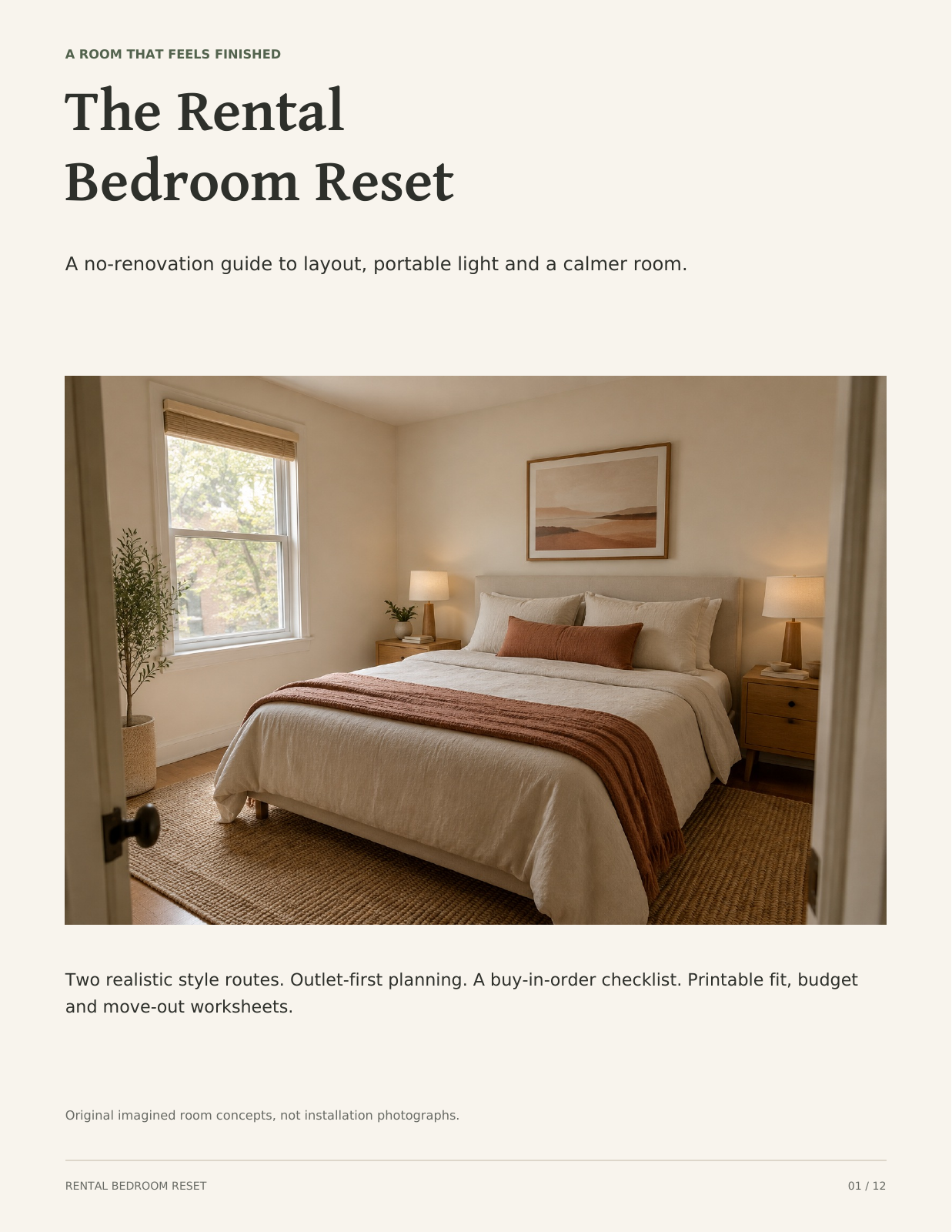
For another planning exercise, browse the Aluminium Glass Design guides. Prefer a printable room worksheet? Read the details of our Rental Bedroom Reset digital guide before buying. It is not a furniture or installation service.
Reading behind this guide
Apartment Therapy: small living rooms in real homes and a narrow New York living-room makeover informed the topic. This article and its planning illustration are original; no room photograph or text was copied.
Original AI-generated planning illustration, not a real installation or shoppable furniture set.
Source reading: https://www.apartmenttherapy.com/small-living-room-home-design-ideas-254768
https://www.apartmenttherapy.com/small-nyc-living-room-redo-with-exposed-brick-ba-37562461


Comments
Post a Comment