Quick answer: A short, wide window does not automatically need a short curtain. Before choosing a length, check what the curtain must cover, how the window opens and where the fabric can rest safely. Test the proportions before buying rods or panels.
Start with the job, not the photograph
Does this window need privacy, softer daylight or simply a less bare wall? Write down the main job. Decorative fabric and a privacy layer can be different things. Check the view from outside after dark, with the room lights on, rather than assuming a light fabric hides everything.
Small-window styling is still getting attention. Apartment Therapy's February 2026 feature asks a designer to solve mismatched and short windows in a compact home. The designer considers the whole room and uses wider rods and taller treatments in that particular house. That is an example to study, not a measurement rule for every room.
Make a simple measurement sheet
Measure the opening and frame, then the clear wall beside and above them. Record the proposed rod position separately from the fabric length. A curtain measured from the top of the glass may come out short when the rod sits higher.
Include handles, inward-opening shutters, furniture and the route people use. Open the window fully while imagining where the fabric will sit. Keep ventilation, escape access and moving parts clear. Never use a photograph to decide drilling points in an aluminium frame.
Compare two lengths before ordering
On paper, draw one longer option and one option that ends below the sill. Compare each with the furniture, floor and actual privacy need. Long fabric can add a vertical line; a shorter treatment can be more practical where the lower wall needs to stay clear. Neither is automatically a mistake.
Do not drape fabric over heaters or block vents. Use the appliance maker's clearance rules, not a guessed distance. Avoid loose fabric on a busy walking route. Where children may be present, choose suitable cordless window coverings and keep operating cords out of reach.
Check the closed and open positions
A wider rod only helps if the wall and fittings support it and the panels can stack without covering the opening. Check the fabric's finished width, its heading style and the weight the hardware is rated to carry. Ask the installer about the wall material and hidden services before drilling. Renters should check permission and move-out requirements first.
A no-buy test for this weekend
Sketch the proposed curtain outline on a photograph of your own wall. Review it in daylight and at night. If the length works but the width blocks the handle, fix the plan before ordering. If the existing blind already supplies privacy, you may only need a modest decorative layer rather than an entirely new system.
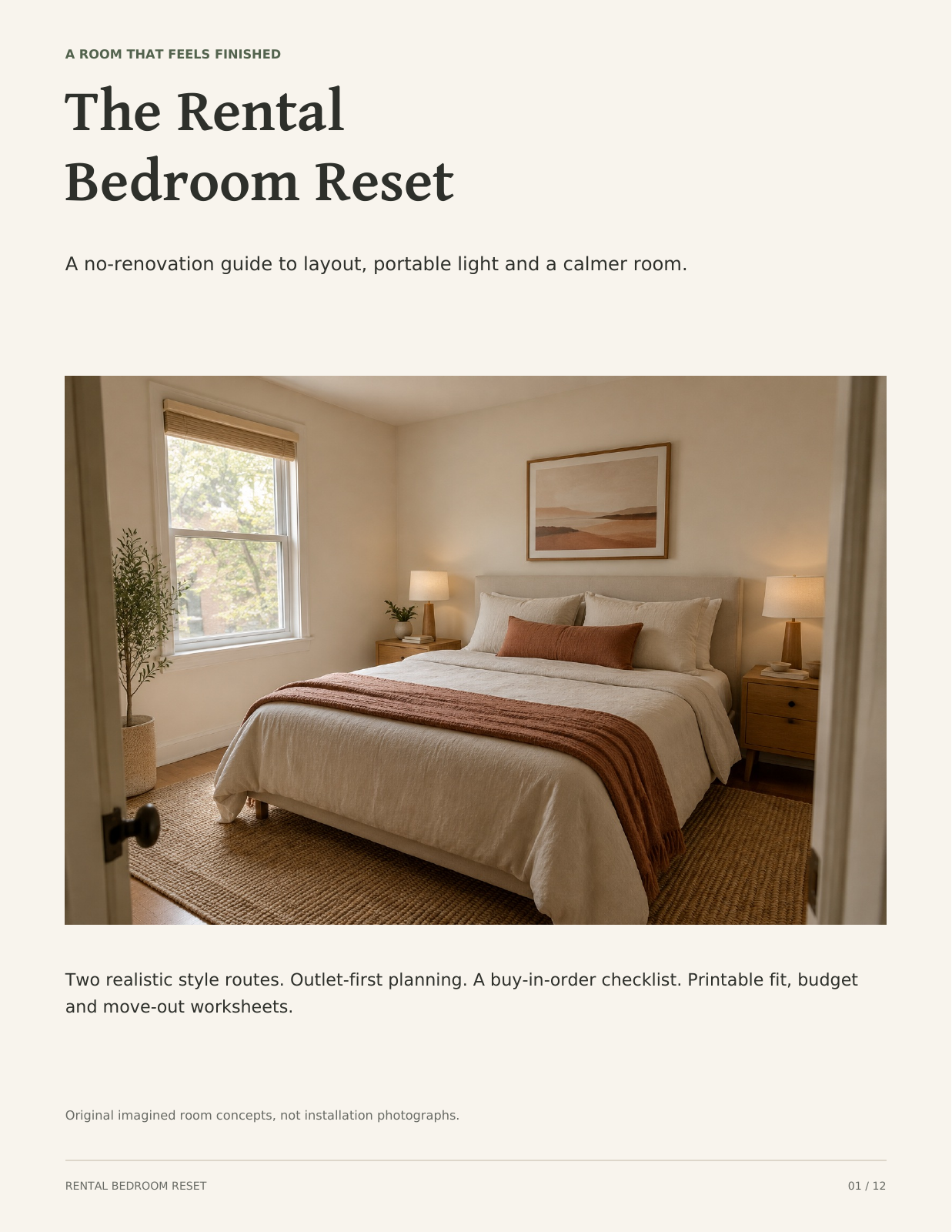
The illustration is an imagined room, not an installation plan or a shoppable set. The useful result is a measurement sheet that fits your own window.
Further reading: Apartment Therapy, a designer's approach to awkward small windows:
https://www.apartmenttherapy.com/awkward-window-treatments-2-37538164
Window-covering cord safety, US Consumer Product Safety Commission:
https://www.cpsc.gov/gocordless


Comments
Post a Comment