Quick answer: Before buying a bigger mirror for a small room, decide what it will reflect and how it can be mounted safely. A mirror can change the view of a room. It cannot add floor space or replace a clear walking route.
Start with the reflection you want
Look at the wall from your usual seat and from the doorway. A mirror might repeat a plant, a window or a calm part of the room. It can also repeat an untidy shelf or put bright light in your eyes. Make a note of the view you would like to see twice before choosing the glass.
Small-space design coverage often uses mirrors to bounce light and create a sense of depth. Apartment Therapy's mirror-placement feature shows a designer placing a mirror in front of a bathroom window. It is an interesting finished project, not permission to copy its hook, chain or drilling detail in another home. This guide uses a safer planning question: can a suitable wall-mounted mirror give the useful reflection without interfering with a window?
Try a paper outline, not unsupported glass
Measure the proposed wall area and draw the mirror shape on a room photograph. Compare a modest rectangle with a wider option. Keep switches, outlets, doors and furniture movement visible in the plan. Do not balance a heavy mirror on a chair to test its position.
The right size should work for the person using it as well as the room. If the main job is checking your appearance, test the intended height for the users of that room. If the main job is decoration, check the reflection from the actual seat rather than from a camera angle chosen for a photograph.
Check light at more than one time
A position that looks comfortable in soft morning light can look different later. Review the reflected view when the room is brightest and after the lamps are on. If a bright window or bare lamp is repeated in your eye line, try another position. Avoid aiming reflected sun onto a place where someone sits or works.
Mounting is a separate decision
A thin frame does not tell you that a mirror is light, and an adhesive hook's appearance does not prove it can support glass. Follow the mirror maker's instructions and use fixings suited to both the product weight and your wall material. If those facts are uncertain, ask a qualified installer before buying or drilling.
IKEA's mirror instructions give a useful reminder: incorrect mounting can let a mirror fall, and screws and fittings must suit the wall and have enough holding power. That principle is not a universal fitting specification. Do not substitute a generic screw count or tape recommendation for the instructions of your chosen mirror.
Renters should get the needed permission first. Do not drill into window frames, tiled wet areas or walls with unknown services on the strength of a styling article. Freestanding and leaning mirrors need their own maker's placement and securing instructions; they are not an automatic no-drill solution.
Finish with a no-buy decision
If the planned reflection improves the view but the mounting is unresolved, keep the idea on paper. If it repeats glare or clutter, move the outline and review it again. Sometimes tidying the reflected shelf or changing a lamp position does more than buying larger glass.
The illustration is an imagined room, not a photograph of completed installation or a shoppable product. This is a room-planning aid, not structural or electrical advice.
Design reading:
https://www.apartmenttherapy.com/mirror-in-front-of-a-window-37494640
Mounting safety example, IKEA mirror instructions:
https://www.ikea.com/gb/en/assembly_instructions/nysjoen-mirror-with-shelf-white__AA-2246804-3-100.pdf
Planning a whole rental bedroom?
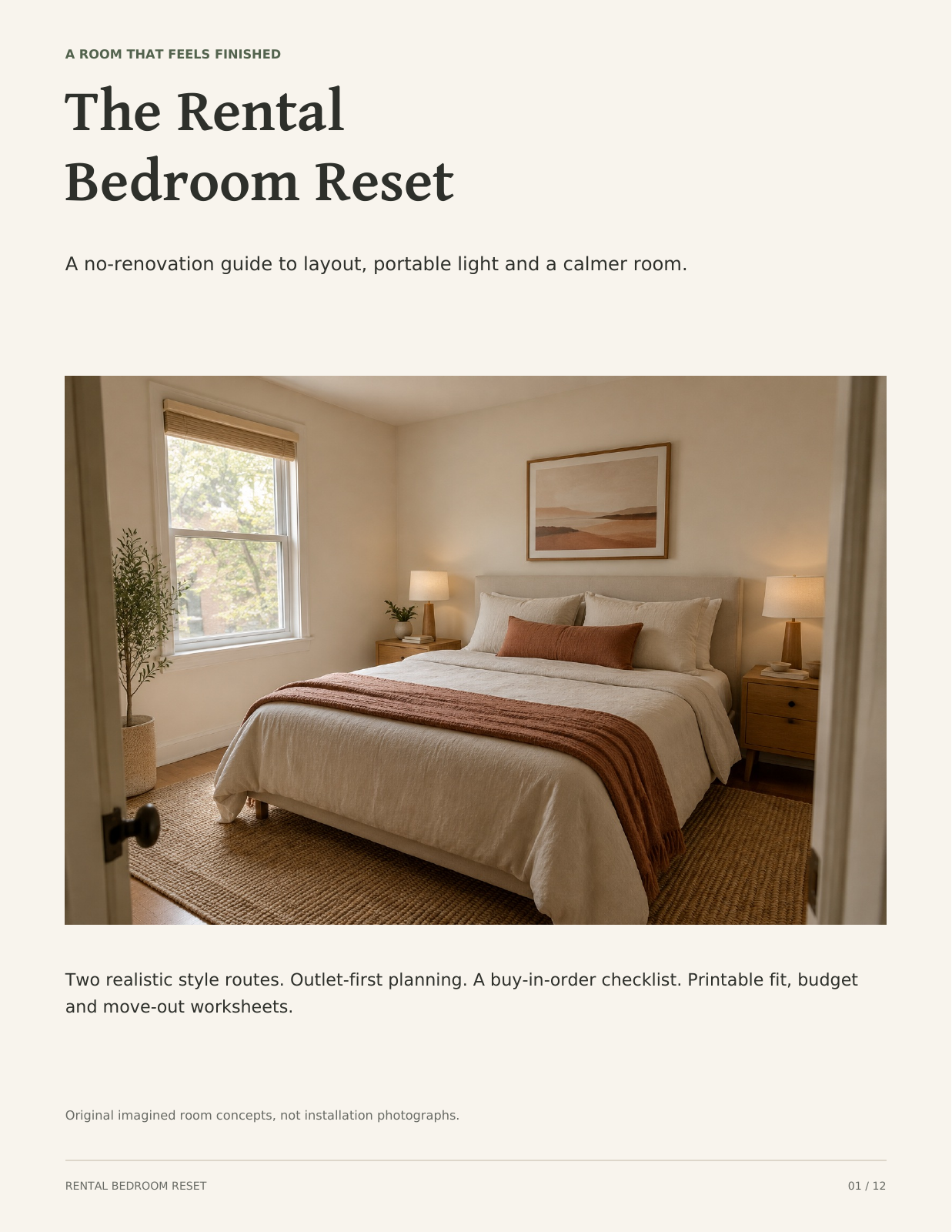
Before choosing a mirror, map the furniture, outlets and lighting together. Our The Rental Bedroom Reset is a 12-page illustrated PDF with two style routes and printable fit, budget and move-out worksheets. It is available on Leanpub for USD 4.99. This is an optional paid guide; the mirror-planning steps above are free. Check your lease and product instructions before making changes.


Comments
Post a Comment